- Home
- Business Accounting
- Business Structure
Business Structure
Choose The Right Entity For Your Company
Choosing the right business structure can be a difficult task. To assist taxpayers who are starting their own company, the Treasury Department releases a fact sheet that lists the differences between the most common forms of business accounting entities.
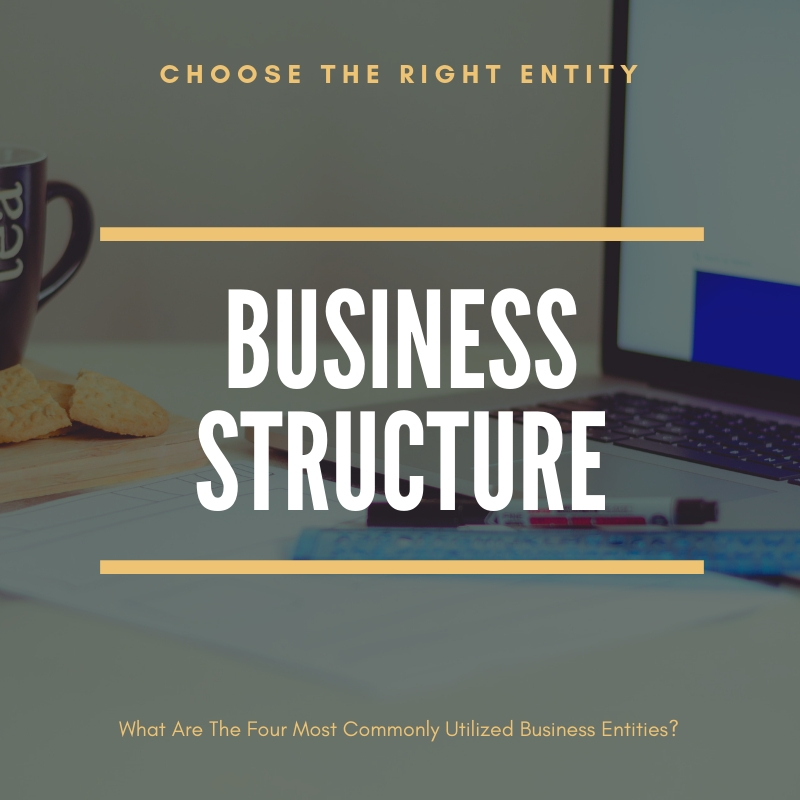
The Treasury advises that each company should be evaluated from a tax, liability and record keeping perspective.
The Treasury's fact sheet summarizes some of the important traits of the four most commonly utilized business entities operating in the U.S. today:
- Sole proprietorships
- Partnerships
- Corporations, including Subchapter S corporations (S-corps)
- Limited liability companies (LLCs)
Sole Proprietor Business Structure
The sole proprietorship is one of the most common types of business structure entities, in part because it is easily formed. The owner of a sole proprietorship is personally liable for the debts and other obligations of the entity.
Additionally, a sole proprietor must pay self-employment tax and, since taxes are not withheld, must make quarterly estimated tax payments. Generally, a sole proprietor files Form 1040, Schedule C on their personal income tax return.
Partnerships
A partnership is a popular "pass-through" entity organized by two or more individuals.
Income, credits, deductions, profits, and losses pass through the partnership to the partners, who must report the information on their individual income tax returns (Form 1040).
No tax is paid at the partnership level, although a Form 1065, U.S. Return of Partnership Income, is filed in the name of the partnership. Since no tax is withheld at the entity level, partners must make quarterly estimated tax payments.
Limited Liability Companies
The LLC enjoyed a meteoric rise to popularity in the 1990s. The LLC is a creature of state law and every state, as well as the District of Columbia, has adopted statutory provisions governing the formation and operation of LLCs.
The LLC is popular because, like a corporation, its members enjoy limited personal liability for the debts and other obligations of the entity, and like a partnership, it is a pass-through entity business structure.
In order to be an LLC, you will need to file a legal LLC Operating Agreement.

All accounting items of income, profits, loss, deductions, and credits pass through to individual members. In general, a LLC can have a single member or multiple members. A single member LLC is generally taxed, for federal tax purposes, as a sole proprietorship and a multi-member LLC is taxed as a partnership.
Corporations
Like LLCs, the formation of a corporation business structure is governed by state law. Generally, corporations pay tax at both the state and federal levels.
A corporation files Form 1120, U.S. Corporation Income Tax Return, and pays tax at rates. Corporate earnings that are distributed to shareholders as dividends are taxed at individual rates on shareholders' individual income tax returns.
However, shareholders are shielded from personal liability as liability for the debts and other obligations of the entity rest with the corporation.
If you would like to set your business up as a corporation, you can contact me for help.
S Corporations
A Subchapter S corporation (commonly referred to as an S-corp) is a legal entity that follows state law like a corporation and the shareholders have only limited liability. However, it is similar, in some respects, to a partnership because income passes through the S-corp to individual shareholders, who report income and other items on their individual income tax returns.
To be treated as an S-corp for federal tax purposes, a corporation must file Form 2553, Election by a Small Business Corporation. An S-corp files Form 1120S, U.S. Corporation Income Tax Return for an S Corporation. This is an information return only. The income "flows through" to each shareholder's individual income tax return.
If you'd like a more detailed explanation of the strengths and weaknesses of a particular business entity, please contact me.
Business Structure Factors to Consider
When choosing the right business structure, several factors need to be considered to ensure the best fit for your business. The chosen structure will impact legal obligations, taxation, decision-making, and personal liability. Here is a summary of key considerations for selecting the appropriate business structure:
- Legal and liability protection: Consider the level of liability protection you desire. Some structures, such as corporations and limited liability companies (LLCs), offer limited liability, shielding personal assets from business debts and obligations. Sole proprietorships and partnerships do not provide the same level of protection, making personal assets vulnerable.
- Tax implications: Evaluate the tax obligations associated with each business structure. Some structures, like sole proprietorships and partnerships, have pass-through taxation, where business income is reported on personal tax returns. Corporations have separate taxation, potentially leading to double taxation. LLCs provide flexibility, allowing owners to choose between pass-through or corporate taxation.
- Ownership and management: Determine the ownership and management structure that aligns with your business vision. Sole proprietorships and partnerships allow for full ownership control but may lack formal management structure. Corporations have shareholders, a board of directors, and officers, offering a hierarchical management system. LLCs provide flexibility in ownership and management arrangements.
- Scalability and growth: Consider your growth plans. If you anticipate significant growth or seeking outside investment, a corporation or LLC might be more suitable. These structures allow for the issuance of stocks or membership interests, making it easier to attract investors or raise capital. Sole proprietorships and partnerships might have limitations in this aspect.
- Compliance and administration: Understand the administrative and compliance requirements of each business structure. Corporations and LLCs generally have more formalities, such as regular meetings, record-keeping, and filing annual reports. Sole proprietorships and partnerships have fewer formalities but may require separate business licenses or permits.
- Costs: Evaluate the costs associated with setting up and maintaining each business structure. Corporations and LLCs generally have higher initial setup costs and ongoing compliance fees. Sole proprietorships and partnerships have fewer associated costs.
It is advisable to consult with an attorney, accountant, or business advisor to assess the specific needs and goals of your business. They can provide professional guidance, considering legal, tax, and operational factors to help you choose the most suitable business structure.
You might like these
Security I You Are Secure!
Security - You Are Secure! Rest assured your information is safe with us
SBI eLearning - How To Build Your Own Website
SBI eLearning - SBI eLearning helps high achieving people build a sought-after business that reflects your passion and personality.
Cancel I Please Provide Us Feedback
Cancel - Please provide us feedback on why you decided to cancel.



More Business Accounting Articles
- Business Plan Advice
- Business Planner
- Business Skills And Bookkeeping Services
- Business Structure
- Small Business Tax Services
- Sound Bookkeeping Principles For Businesses
Please subscribe to my monthly newsletter, Bookkeeping Basics E-zine. It tells you every month about the new information that I have added, including some great tips and advice from myself and other Bookkeeping Basics readers.
Like Bookkeeping-Basics.net?
- Home
- Business Accounting
- Business Structure

SUBSCRIBE to YOUTUBE

Recent Articles


-
Interest Income Tax Questions - Valuable Additions
Jan 20, 24 11:29 PM
Interest Income Tax Questions - Learn how to navigate the complexities of reporting interest income, tax rates, and potential deductions to optimize your earnings and stay on the right side of the tax… -
Investment Income Tax Questions - Wealth Building
Jan 20, 24 11:25 PM
 Investment Income Tax Questions - Learn how to navigate the complexities of investment income taxes and make informed decisions to optimize your earnings while staying compliant with tax laws.
Comments?
I started this labor of love in 2008. Thank you for making it one of the top visited sites about bookkeeping.
And thank you to "SBI !," which made it possible.
When you are in need of a bookkeeper , give me a call! Until then, I'd love to hear from you right here.
Visitors' Favorite Pages
 |
 |
 |
 |
 |
 |
 |
Home - Blog - Contact Me - Disclaimer - SiteMap - SiteSearch - Ezine
© Copyright 2008-2023 Bookkeeping-Basics.net
PRIVACY POLICY
New! Comments
Have your say about what you just read! Leave me a comment in the box below.